
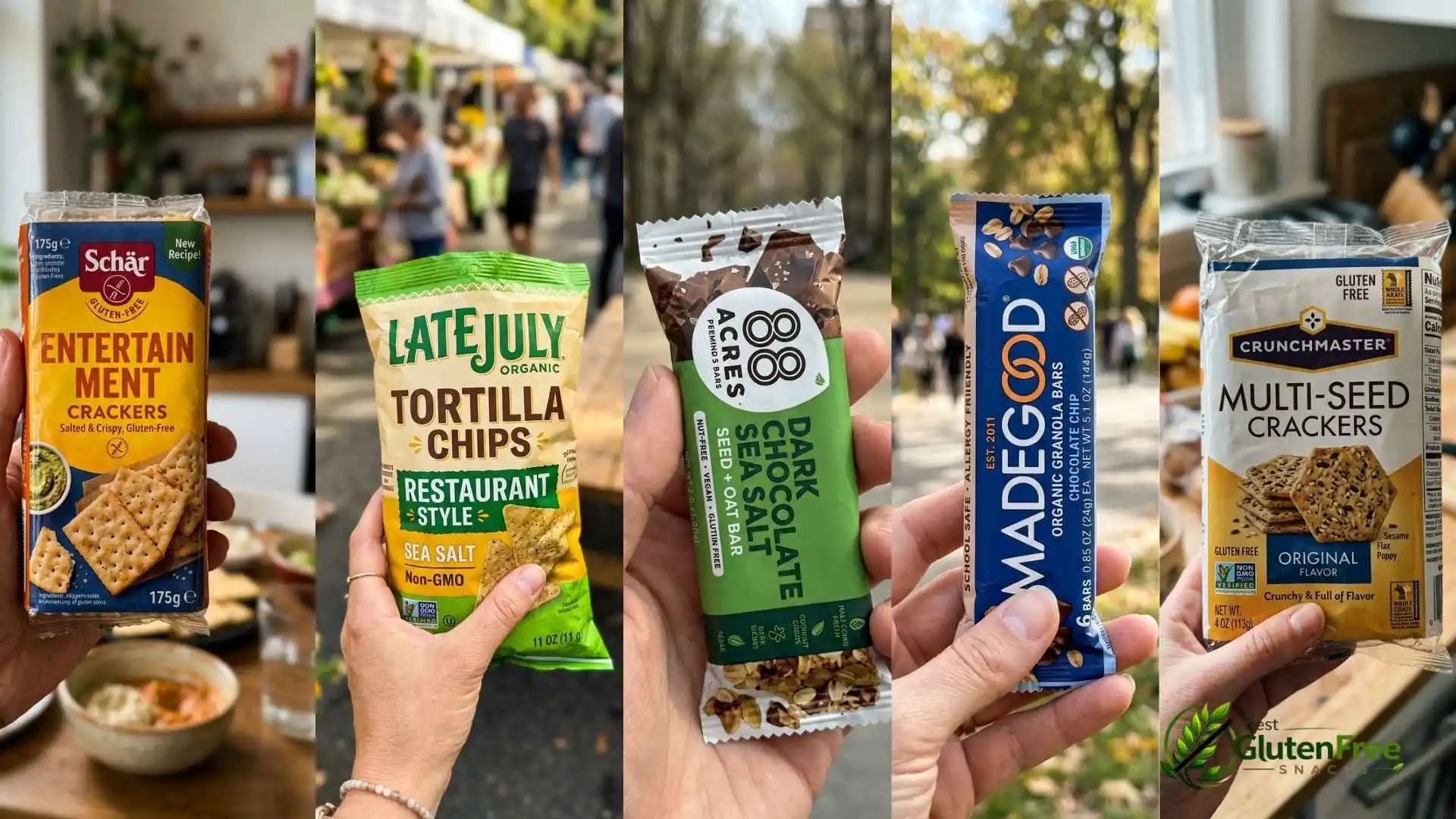
I have been relying on gluten-free snack brands for the last 8 years, and the difference between a good one and a disappointing one shows very quickly, usually within the first few bites. Some brands have improved a lot, especially with better ingredients like almond flour or chickpeas, but others still feel dry, overly processed, or just not worth buying again.
Over time, I have made the habit of picking up different brands from regular grocery stores, Target runs, and even a few random finds online. One thing that constantly surprised me was not just the variety, but also how inconsistent things were. One brand gets the crunch just right using chickpeas or almond flour, while another ends up dry or oddly processed despite looking similar on the shelf. This contrast inspired me to pay closer attention to them.
For this guide, I did not do any guessing; I tested 30 gluten-free snack brands across different categories: crackers, chips, bars, and protein snacks. I didn’t just try one flavour and move on. Then I ranked them from worst to best based on texture, ingredient quality, and real-life usability, not just taste on the first bite. For more detail this gluten-free snacks guide gives a clearer overall view.
This quick table helps you skip the guesswork and spot the best options fast. I keep it short and factual so you can compare without digging through long descriptions. These are the brands I found myself going back to, not just trying once.
| Snack | Brand | Best For | Protein | Texture | Price Range | Certified GF |
|---|---|---|---|---|---|---|
| Chickpea Puffs | Hippeas | Light crunchy snack | 3g | Airy, crispy | $3 – $5 | Yes |
| Almond Flour Crackers | Simple Mills | Clean savory snacking | 3g | Crisp, sturdy | $4 – $6 | Yes |
| Meat Sticks | Chomps | High protein | 10g | Firm, chewy | $2 – $3 per stick | Yes |
| Cassava Crackers | Craize | Grain-free crunch | 2g | Light, crisp | $4 – $6 | Yes |
| Protein Bars | RXBAR | Meal replacement | 12g | Dense, chewy | $2 – $3 per bar | Yes |
| Superfood Bites | Tosi | Clean ingredients | 4g | Crunchy clusters | $5 – $7 | Yes |
| Snack Squares | Mid-Day Squares | Energy + chocolate fix | 6g | Soft, fudgy | $3 – $4 per bar | Yes |
If you look closely, the brands that sit at the top here aren’t just “gluten-free”; they use better bases like chickpeas, cassava flour, or buckwheat. If you are looking to actually buy these across stores, this list of gluten-free snacks to buy makes it easier to filter options quickly.
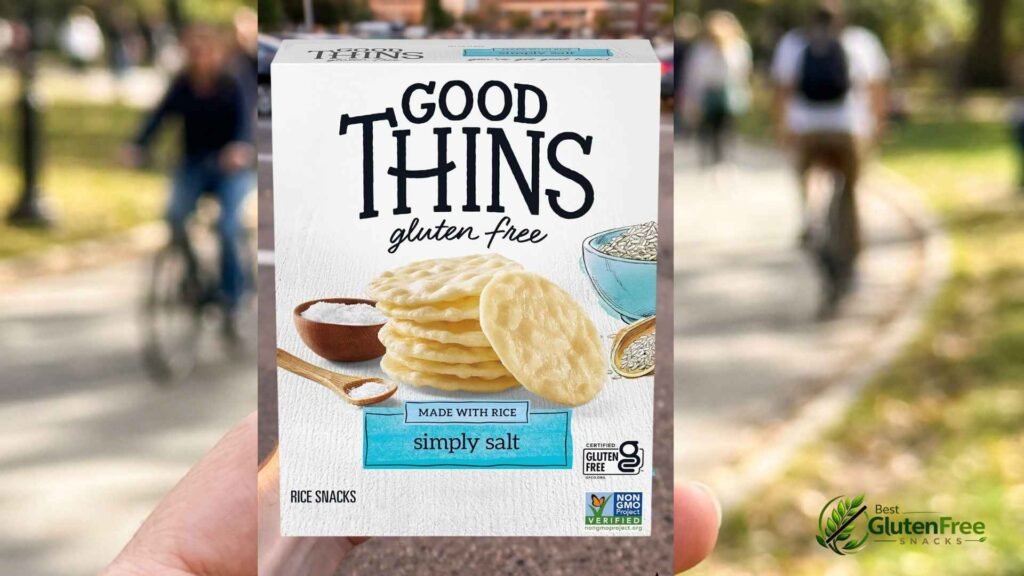
I have picked up Good Thins because the branding makes them look like a clean, reliable gluten-free snack brand. But once you actually eat them, the gap shows pretty quickly. The first few bites feel light and crispy, then they turn into a dry, almost empty crunch that doesn’t hold your attention.
From a brand perspective, they rely heavily on rice flour and starch-based formulas, which explains why they feel so light but don’t satisfy. You’re getting around 1–2g of protein and almost no fibre, so it’s not surprising they don’t last. I tried these during work hours, and within 20 minutes, I was already looking for something else.
If fullness is your main goal, this breakdown of high-protein gluten-free snacks explains which ones actually hold you longer.
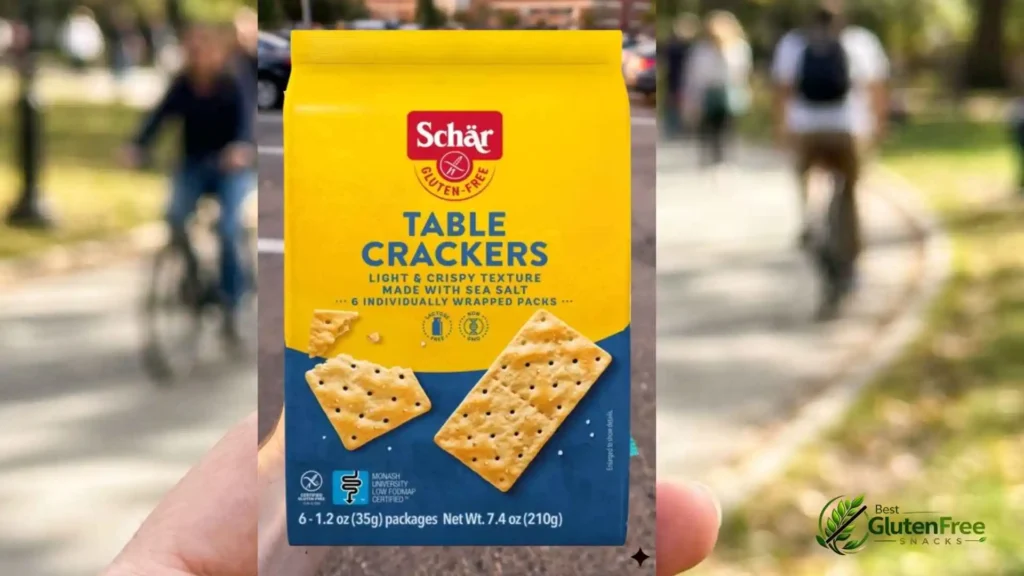
Schär is one of the most recognized gluten-free snack brands, especially for bread alternatives, so I expected more here. These crackers aim to replicate traditional wheat crackers, but the texture gives them away.
They start crisp but quickly turn dry and slightly chalky, especially if you eat more than a few. The ingredient base leans on corn starch and refined flours, which explains the lighter structure but weaker performance. Nutritionally, they’re low in fibre and protein, so they don’t hold up as a real snack.
As a brand, Schär is dependable for availability, but when it comes to snack quality, especially crackers, they feel more functional than enjoyable.
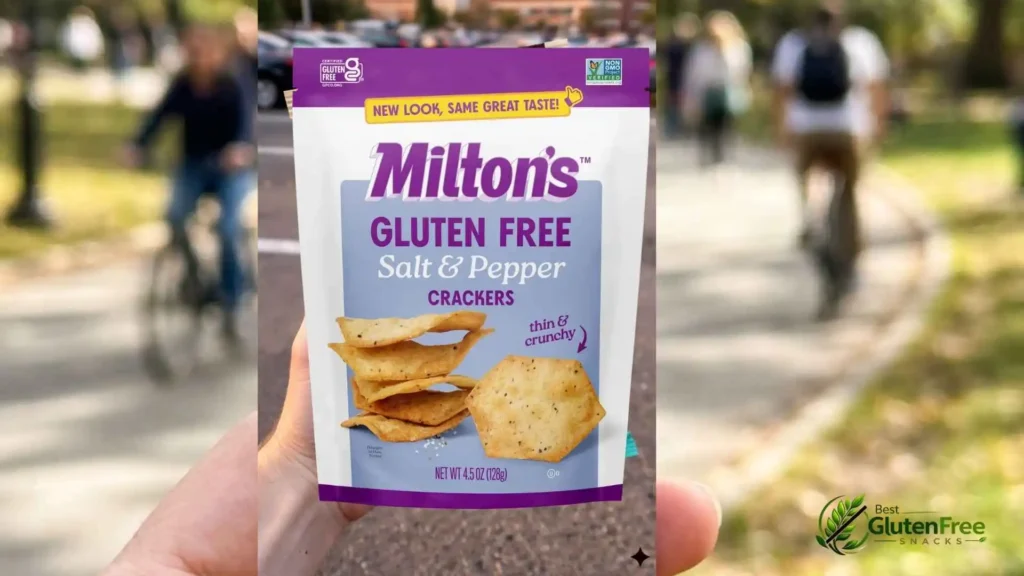
Milton positions itself as a more “premium” gluten-free snack brand, and I did notice better seasoning upfront. The first bite had a decent crunch and flavour, which made me think they’d rank higher.
But once you keep eating, the limitations show. The base still leans heavily on starch blends, and that affects both fullness and texture consistency. You get around 2–3g of protein, but fibre is low, so it doesn’t really sustain you.
I found myself enjoying the taste but still needing another snack soon after. That’s usually where a brand drops in ranking.
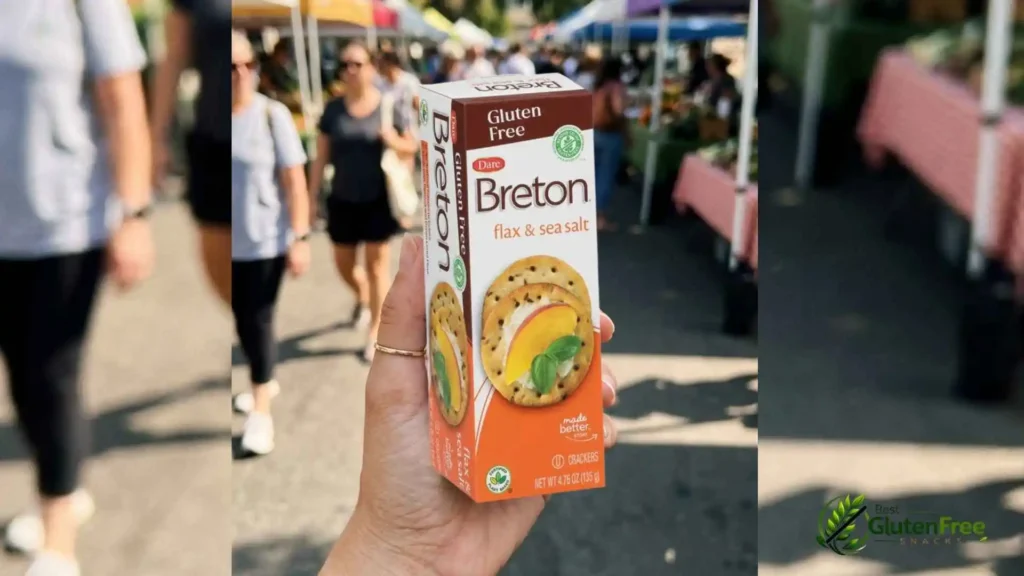
Breton is clearly trying to replicate classic wheat crackers, and visually, they get close. But when you actually use them like a normal cracker, adding cheese or dip,s they don’t hold up the same way.
They soften quickly, which takes away the crunch factor. Ingredient-wise, the use of tapioca starch and refined flours gives them structure at first, but not durability. Nutritionally, they’re similar to others in this range, low protein, lowfibrer.
As a gluten-free snacks brand, Breton is trying to match familiarity, but it sacrifices performance to get there.
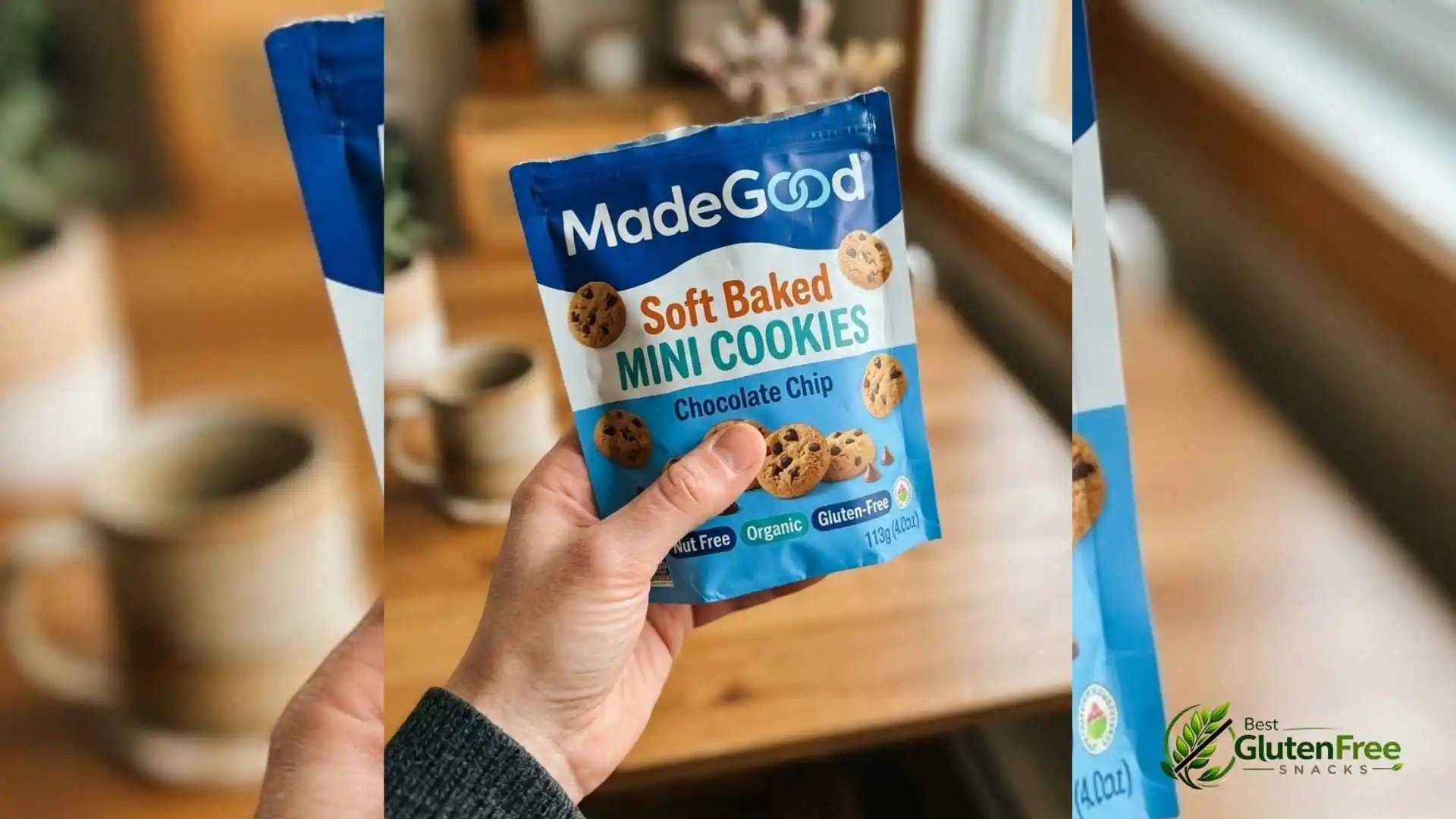
MadeGood is positioned as a clean, allergen-friendly, gluten-free snacks brand, especially for kids, and that shows clearly in this product. The texture is soft, slightly chewy, and easy to eat, but it feels more like a treat than a functional snack.
From a nutrition angle, you’re getting very little protein (around 1–2g) and minimal fiber, which explains why they don’t last. I tried these during a busy day, and they barely held me for half an hour.
The brand does well with ingredient transparency, but in terms of actual snack performance, it’s limited.
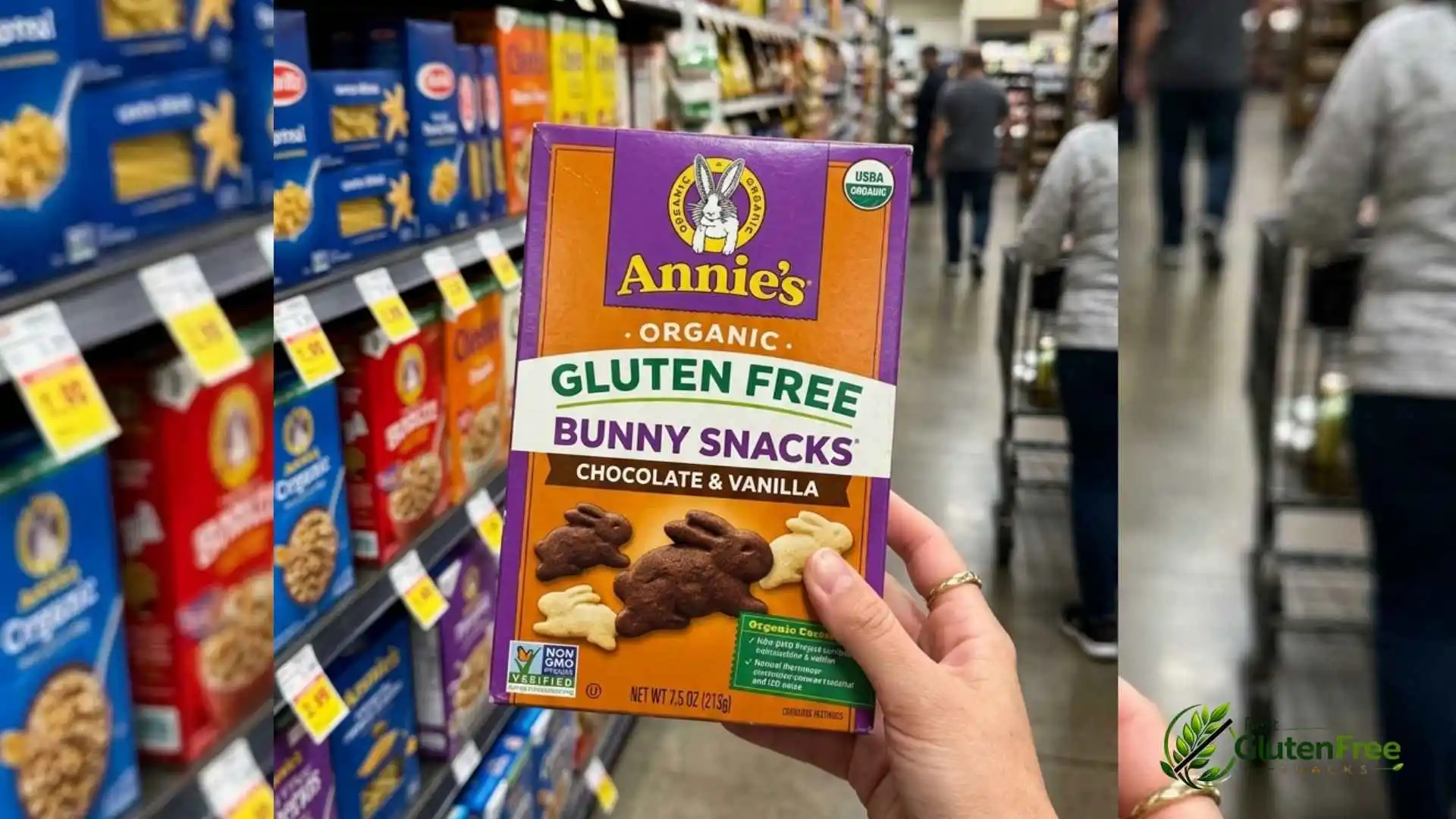
Annie’s is a well-known brand, especially for organic snacks, and these bunny snacks follow that familiar formula. They’re light, crunchy, and easy to eat, but that’s also where they stop.
They rely on rice and corn bases, which keep them simple but not very filling. Protein is low (around 2g), and fibre isn’t strong enough to make a difference. I noticed they’re very easy to overeat without actually feeling satisfied.
As a gluten-free snacks brand, Annie’s focuses more on familiarity and clean labelling than performance.
These types of snacks show up often in kid-focused picks and for more detail, here is the gluten-free snacks for kids list.
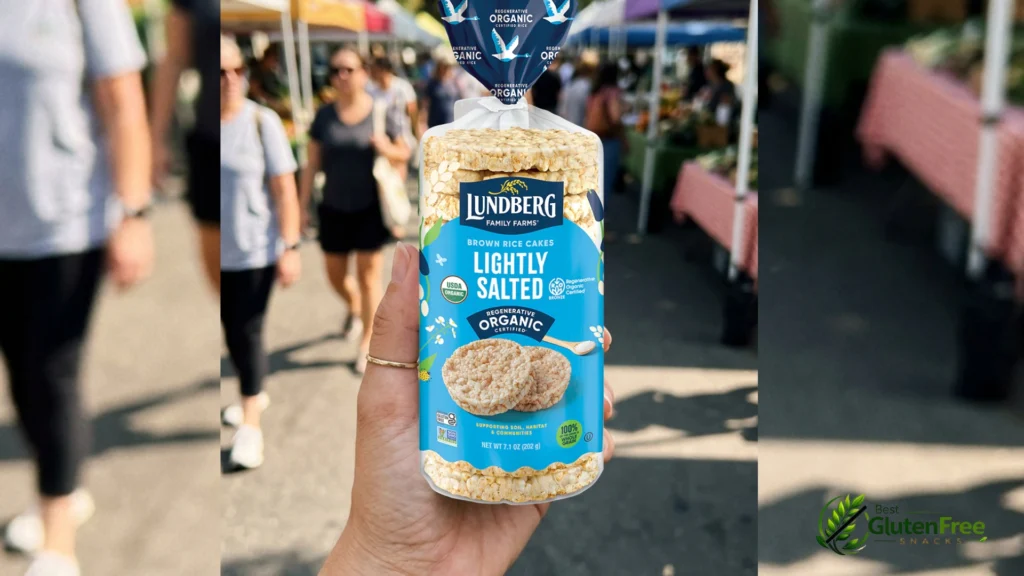
Lundberg is known for clean rice-based products, and these rice cakes reflect that. They’re simple, organic, and consistent, but also very basic in terms of snack performance.
On their own, they feel dry and lacking. I had to add almond butter just to make them work as a proper snack. Nutritionally, they’re low in protein and fibre, which limits their usefulness.
As a gluten-free snacks brand, Lundberg is clean and reliable but not designed for satiety.
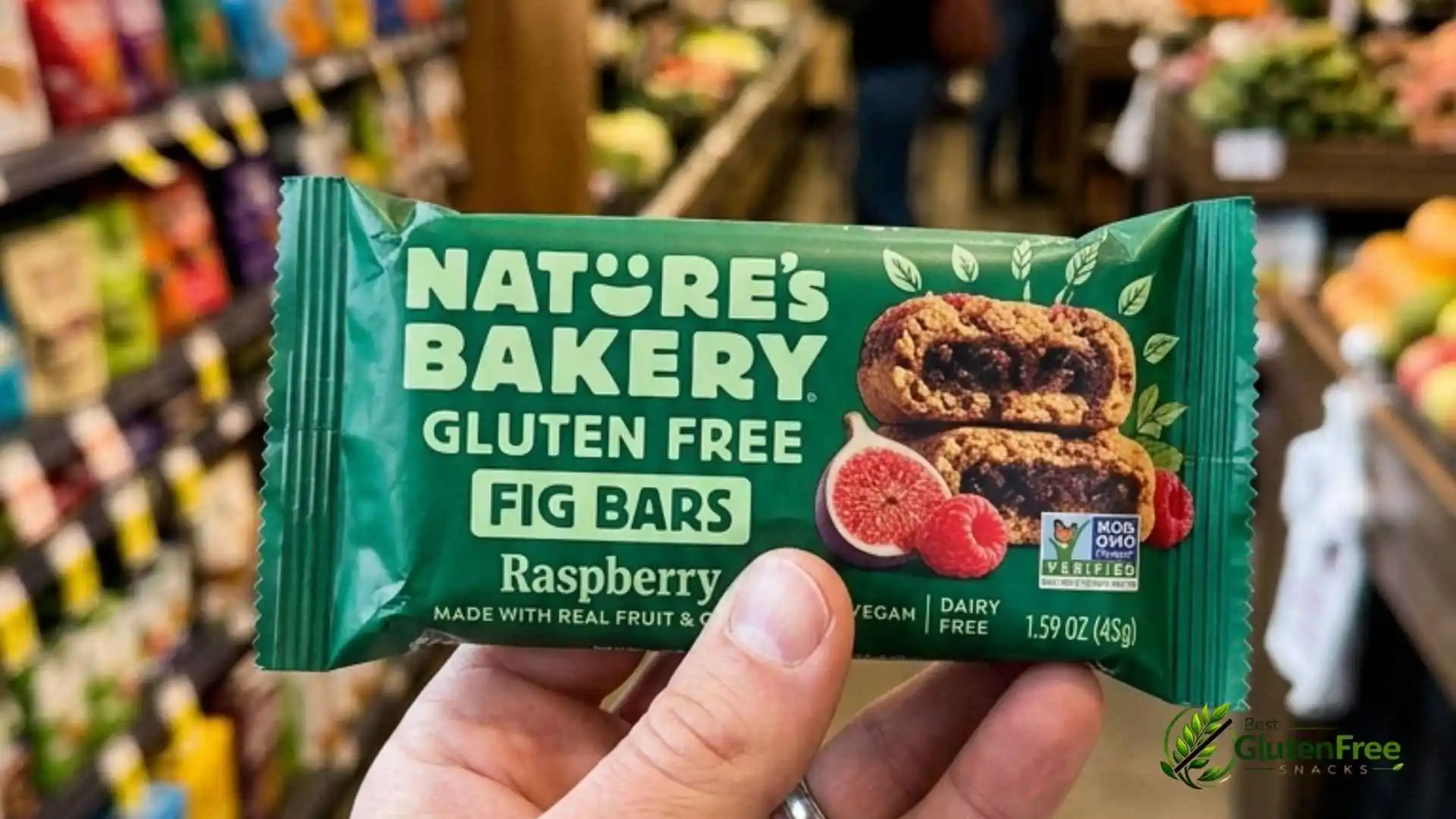
These bars lean heavily into the soft-baked, fruit-filled style, which makes them taste good initially. But they feel closer to a dessert than a balanced snack.
The sugar content is noticeable, and while they provide quick energy, it doesn’t last. Protein is low (around 2–3g), and fibre varies depending on flavour. I found they worked better as a sweet option rather than something functional.
As a gluten-free snacks brand, Nature’s Bakery focuses on taste but sacrifices balance.
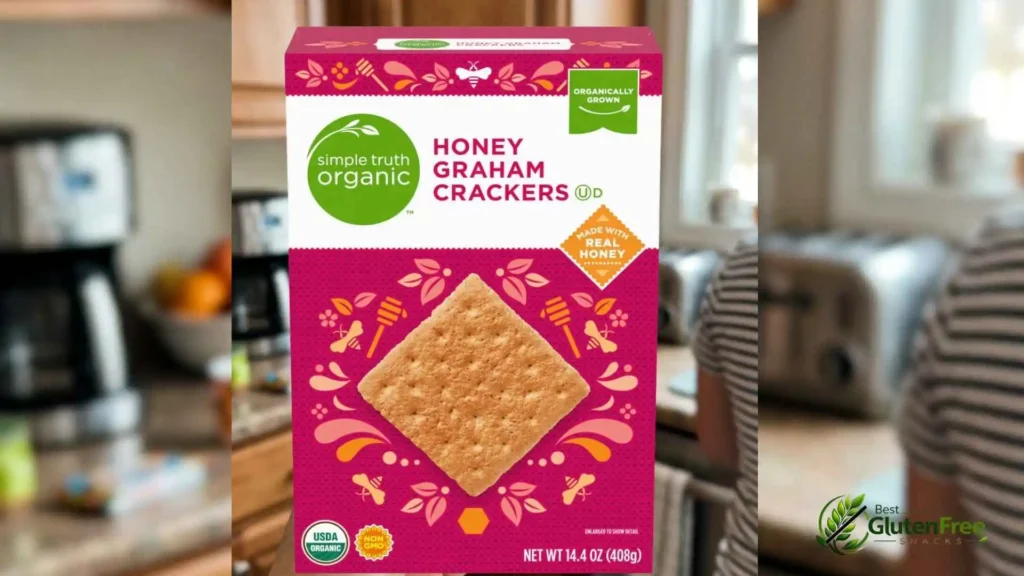
Simple Truth positions itself as a budget-friendly, organic gluten-free snacks brand, and that’s exactly how these crackers feel: decent, but not memorable.
They have a mild crunch and simple ingredient profile, but nothing stands out. Protein and fiber are modest, and the texture doesn’t compete with higher-tier brands.
I finished the pack without any issues, but also without any reason to buy again.
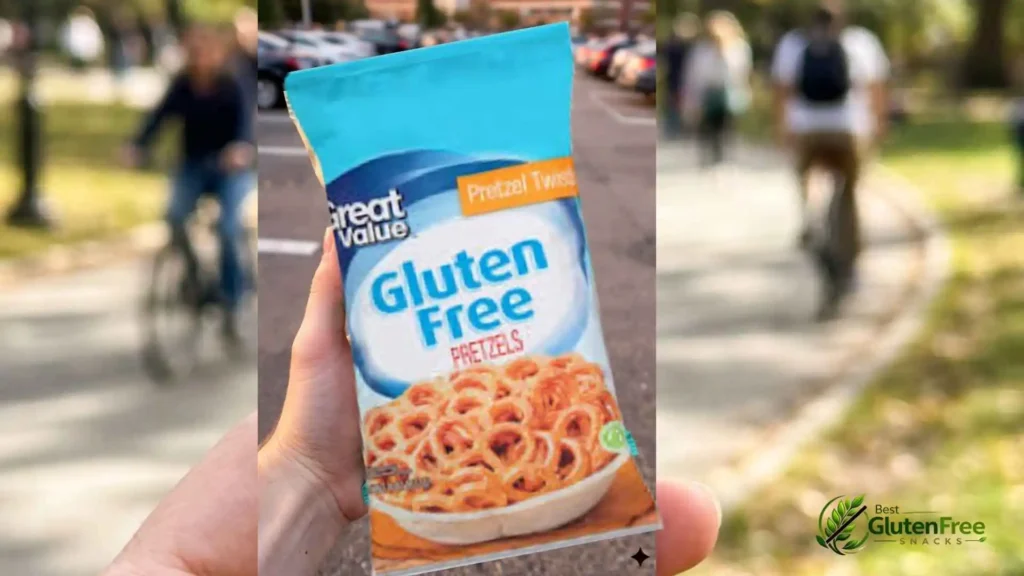
These are clearly built as a low-cost gluten-free snack brand option, and the texture reflects that. They’re noticeably harder and drier than most pretzels, which affects the overall experience.
I found myself needing water after a few bites, which usually means the texture is off. Protein and fiber are minimal, so they don’t offer much beyond basic snacking.
They work if price is your priority, but compared to stronger brands, they feel like a compromise.
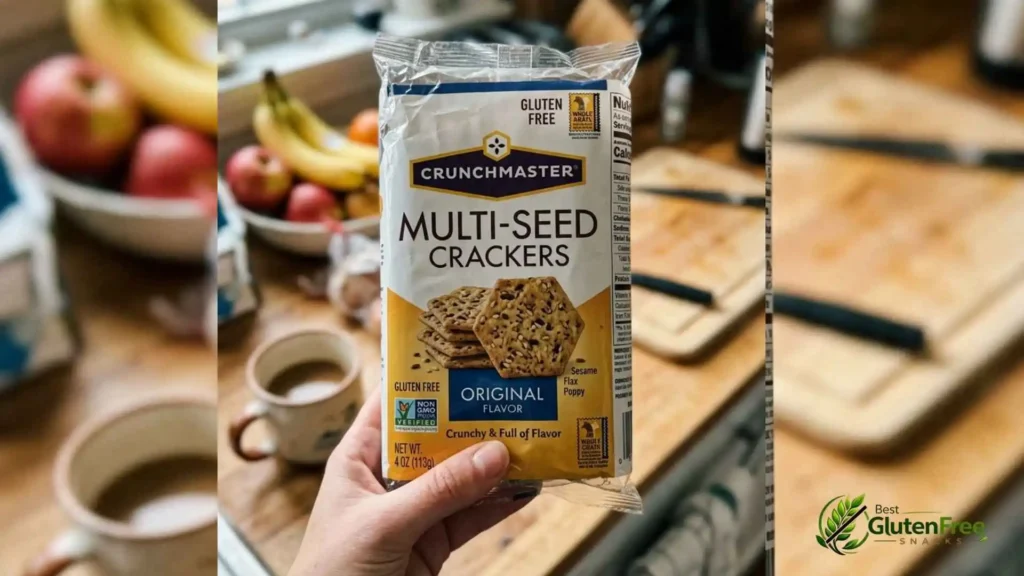
These felt like a step up the moment I opened the pack. The seed blend gives a proper crunch, and unlike rice-heavy crackers, they actually have some structure. I tried them with hummus, and for once, they didn’t collapse mid-bite. If you want more combinations like this that work better in daily use, these gluten-free snack ideas can help mix things up.
That said, they lean a bit too hard on crispiness. After a few bites, they start feeling dry, and the flavor doesn’t evolve much. Nutritionally, they’re better around 3g of protein with some fibre, but still not enough to carry you long.
As a gluten free snacks brand, Crunchmaster is moving in the right direction, but not quite there yet.
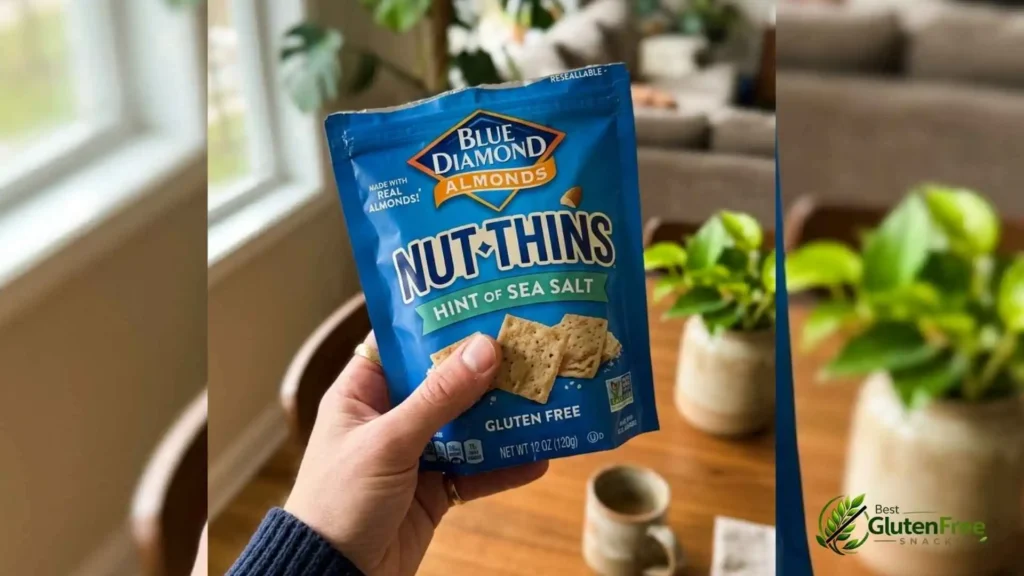
These are reliable gluten free snacks brands I check back to over time. The almond base gives them a slightly richer feel compared to standard crackers, and you can actually taste the difference.
They hold up well with toppings, which already puts them above most in this range. But after eating more, I noticed they still lean a bit thin in structure, and the seasoning can feel uneven depending on the batch.
Protein sits around 3g, but fibre is still moderate, so they’re better, just not fully satisfying.
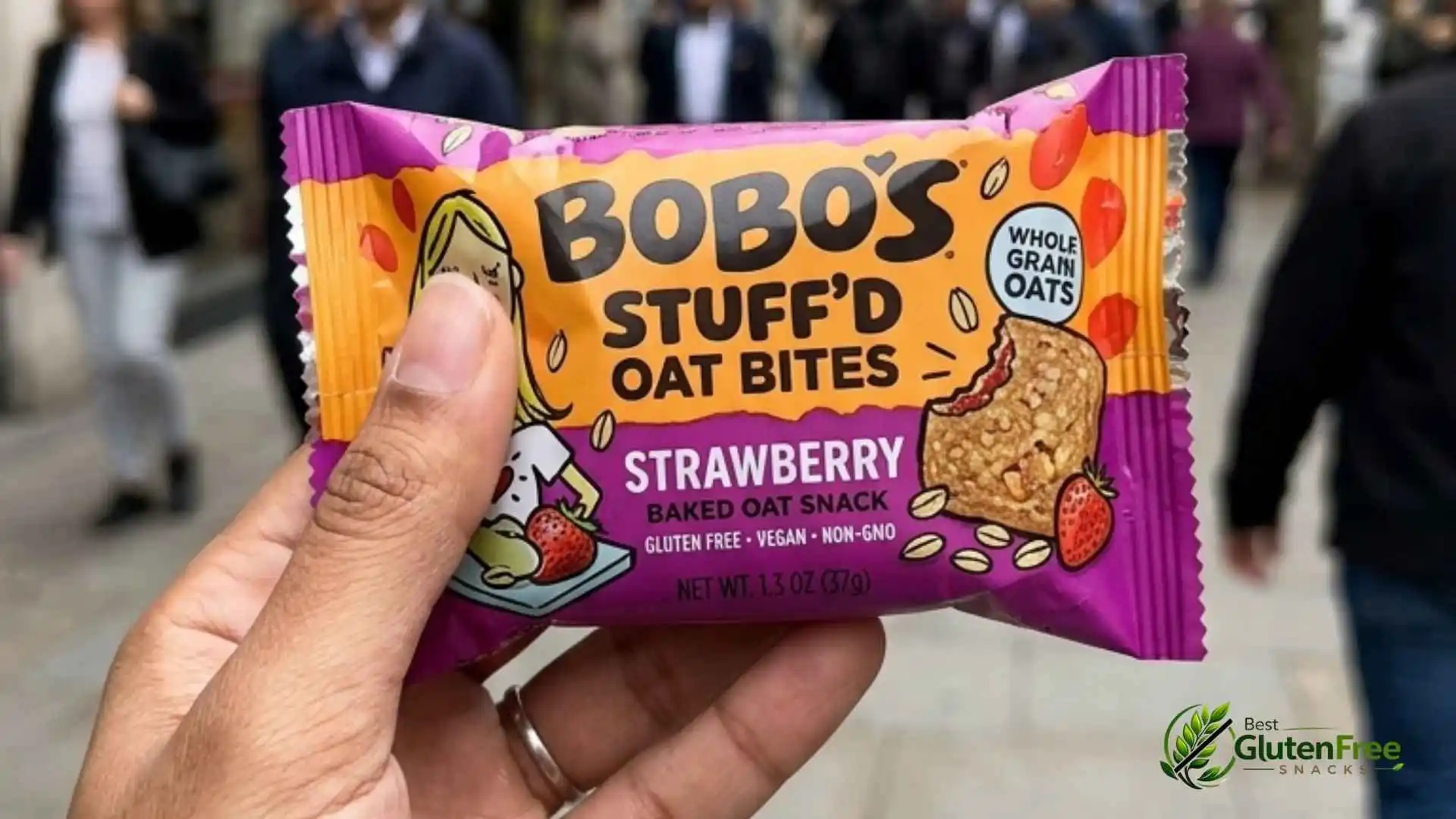
These are soft, filling, and feel more like a mini-meal than a snack. The oat base gives them a dense texture, and they actually hold you for a while compared to most bars.
But here’s the trade-of they can feel heavy. I found that one bite too many, and it starts leaning toward overly dense or slightly sticky. Sugar content is also something to watch, depending onflavourr.
As a brand, Bobo’s focuses on comfort-style snacks, and it shows.
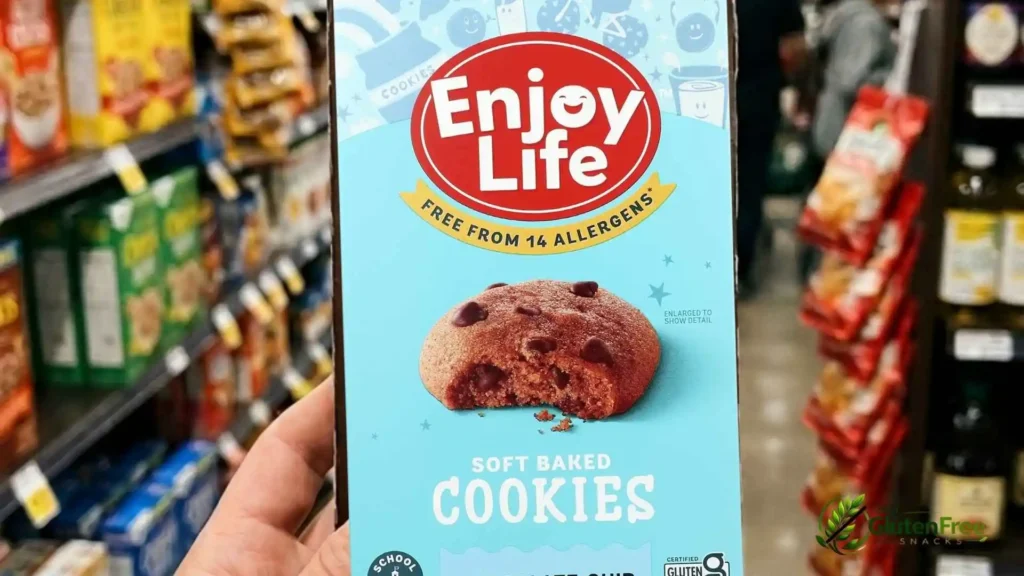
Enjoy Life stands out as an allergen-friendlgluten-freeee snacks brand, and these cookies reflect that. They’re soft, easy to eat, and don’t feel overly artificial like many packaged cookies.
The issue is balance. They taste good, but they’re clearly a treat not something that holds you. Low protein (1–2g) and minimal fibre mean they don’t do much beyond satisfying a craving.
I liked them, but only in small amounts.
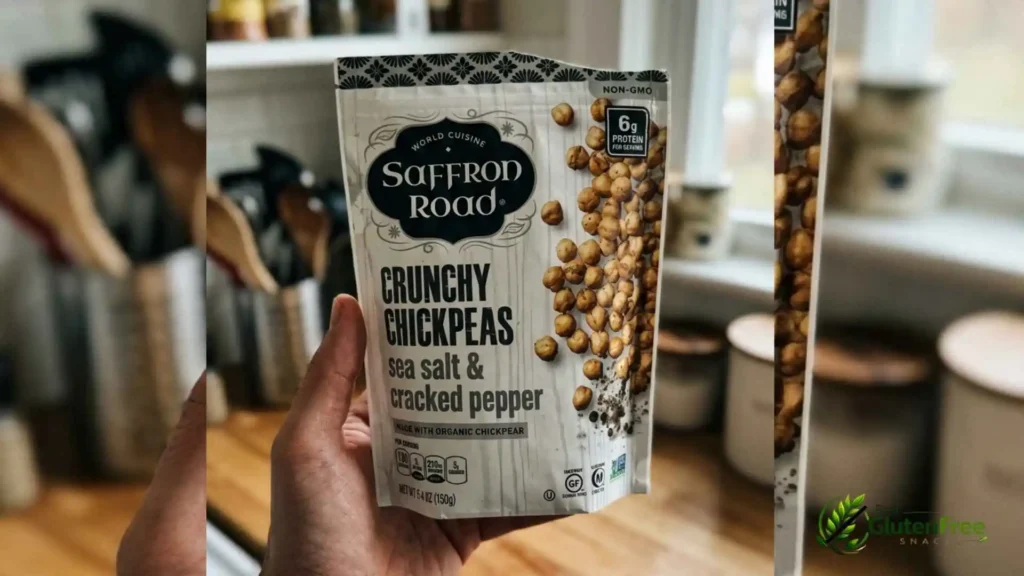
This is where things start getting interesting. Chickpeas immediately change the gam,e better crunch, more fiber, and actual staying power.
I noticed right away that these felt more like a real snack than just something to munch on. Around 5–6g of protein and solid fiber make a difference. But the crunch can be inconsistent; some pieces are perfect, others slightly hard.
Still, as a gluten free snacks brand, this is a big step forward.
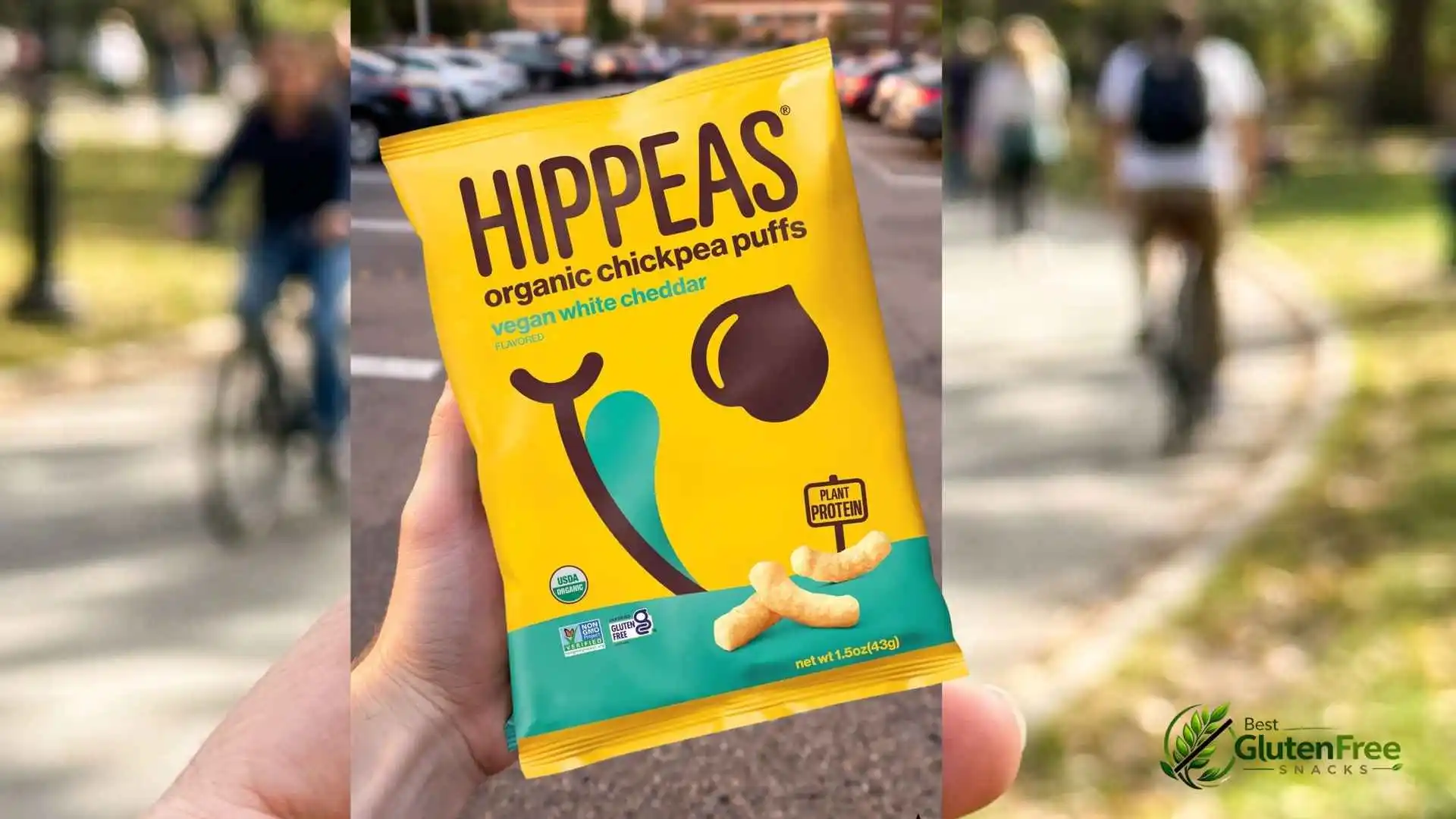
These are fun, light, and honestly addictive. The chickpea base gives them more substance than regular puffs, but they still keep that airy texture people like.
I found them great for casual snacking, but not filling enough to rely on. Protein is around 3g, fiber decent, but the airy texture means you go through the bag fast.
Hippeas as a brand nails flavor and approachability, but not fullness.
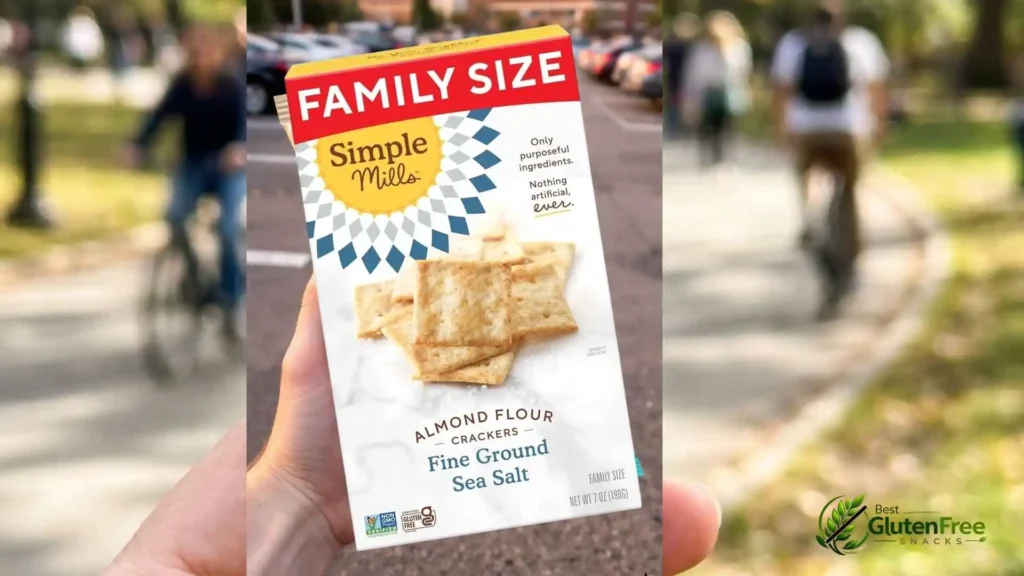
This is one of the first gluten-free snack brands where I noticed a real shift in quality. Almond flour changes everything. It gives these crackers a richer, more stable texture.
They hold up well with dips, don’t crumble easily, and feel more balanced overall. Protein and healthy fats help with satiety, too.
The only downside? Slightly dense texture and higher price,e but honestly, you can feel why.
This is also one of the strongest examples featured in certified gluten free snacks where ingredient quality and testing both matter.
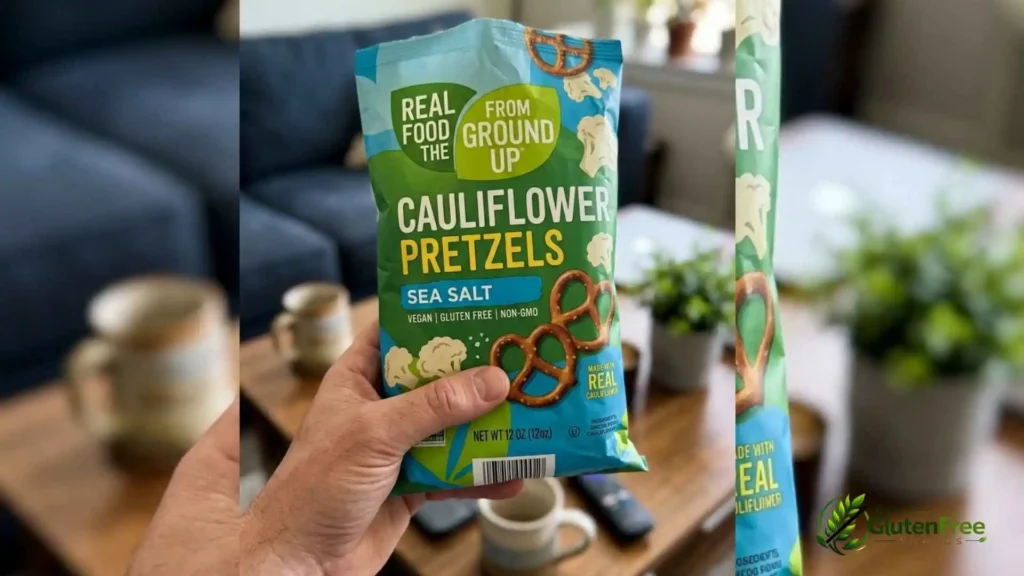
I wasn’t expecting much here, but these surprised me. The texture is closer to real pretzels than most gluten-free versions, with a decent crunch and mild flavour.
But after a while, they feel a bit repetitive. The cauliflower base sounds great, but nutritionally, it doesn’t add much protein or fiber.
Still, as a gluten-free snacks brand, they’re creative and better than most pretzel attempts.
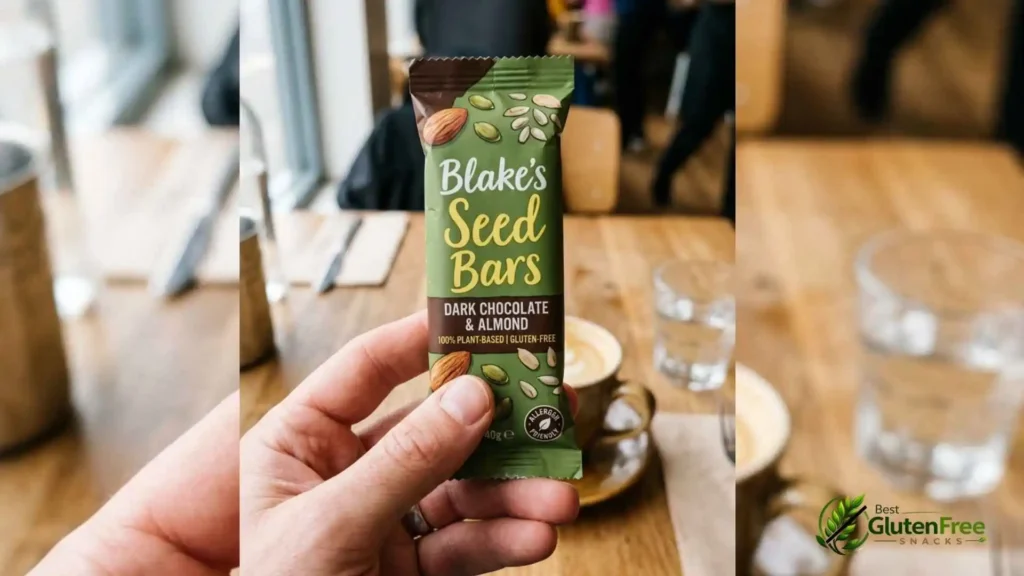
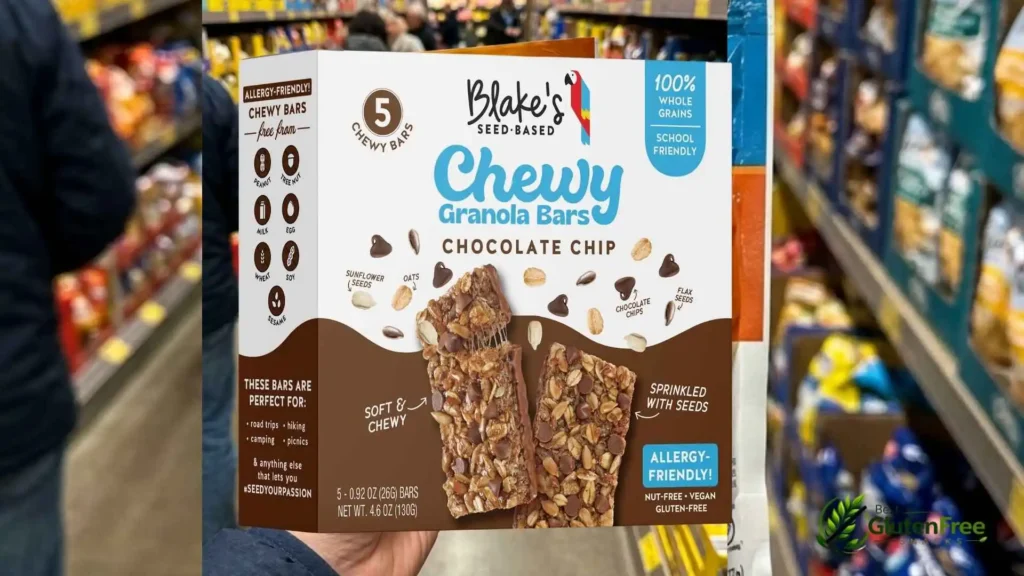
These feel like a cleaner, more functional snack right away. The seed base gives both crunch and real satiety, which is rare in this category.
I noticed they held me longer than most bars thanks to fibre and healthy fats. But the texture can be a bit firm, almost too compact, depending on the batch.
As a gluten-free snacks brand, Blake’s focuses on ingredients, and it shows.
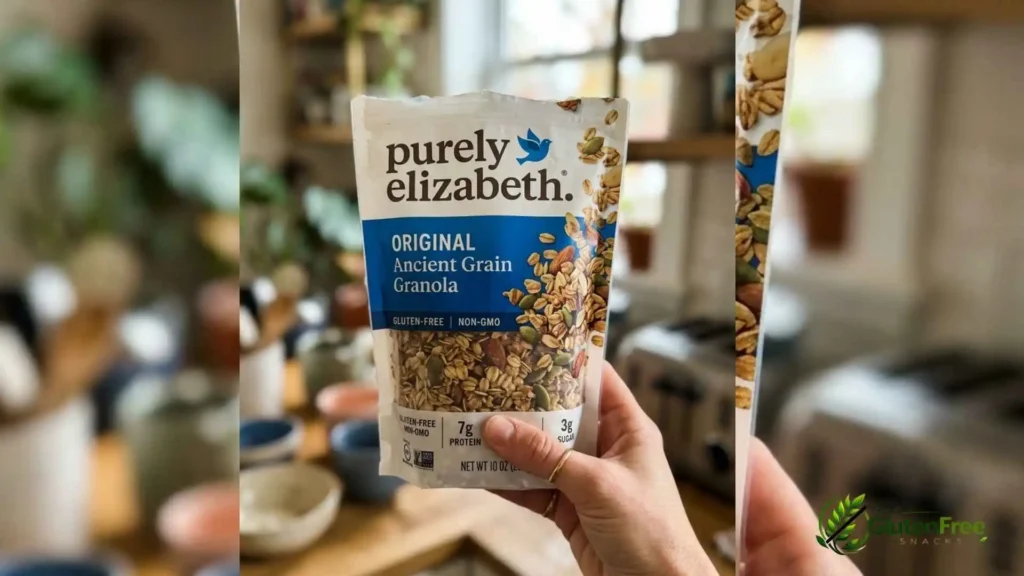
This is one of those brands where you can tell ingredient quality is a priority. The granola has a nice mix of crunch and clusters, and it doesn’t feel overly processed.
I liked how it balanced taste and nutrition. Fibre is decent, and it pairs well with yogurt or even on its own. But it’s still not a standalone “grab-and-go” snack unless portioned carefully.
As a gluten-free snacks brand, this is close to top-tier but just slightly situational.
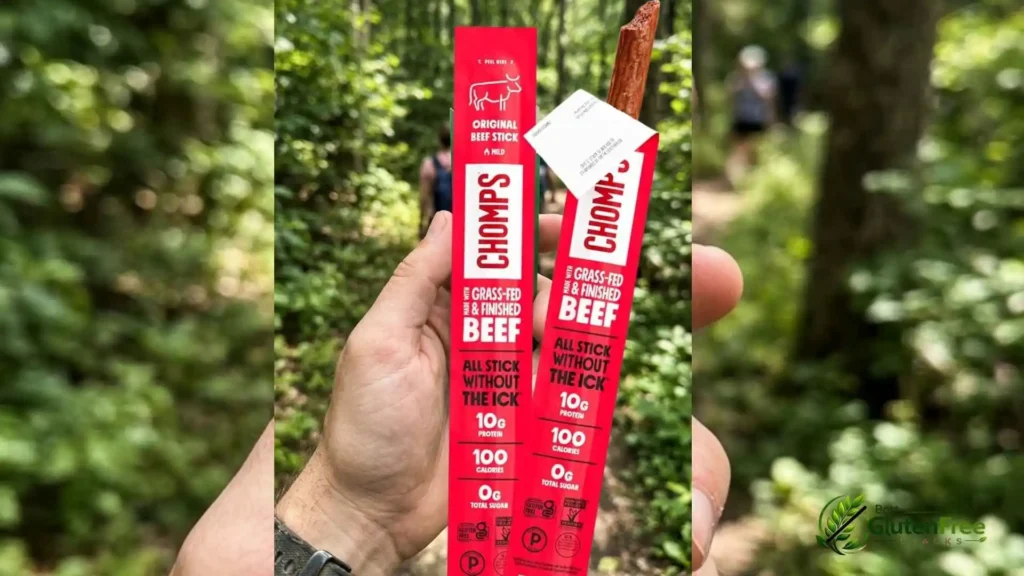
The first time I tried Chomps, it didn’t feel like a “gluten-free snack” at all; it just felt like real food. The texture is firm but not tough, and you can actually taste the seasoning without it being overpowering.
What stood out most was how long it kept me full. With around 10g of protein and zero sugar, it easily carried me through a couple of hours. I’ve kept these in my bag for busy days, and they’ve replaced a lot of weaker snacks.
As a gluten-free snacks brand, Chomps wins on simplicity and performance.
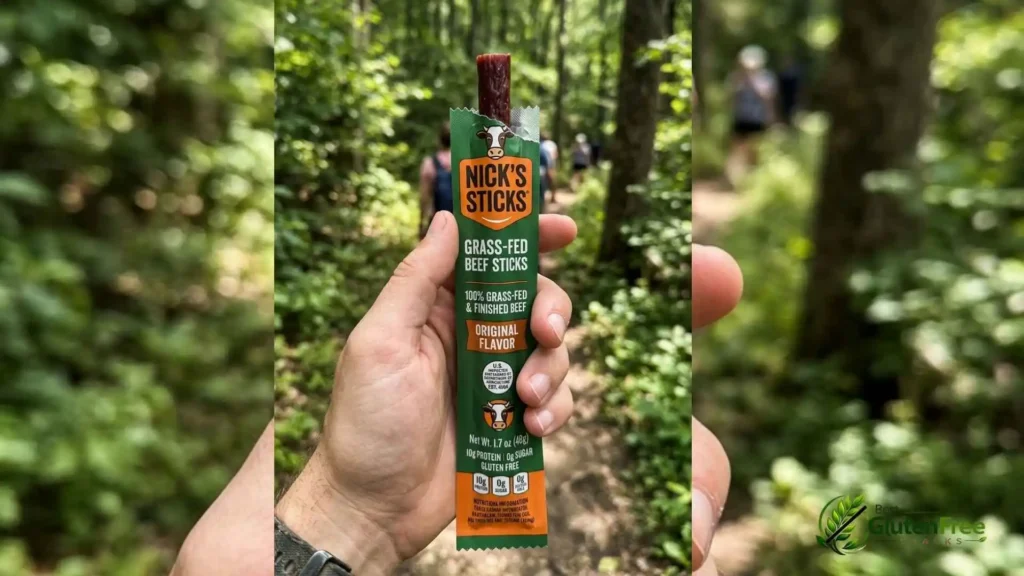
Nick’s Sticks feels similar to Chomps at first, but slightly softer and milder in flavor. The texture is easier to chew, which I actually preferred during quick snacks between tasks.
Nutritionally, it’s solid around 9–10g of protein and gives the same satiety benefit. I noticed it felt a bit less salty, which made it easier to eat regularly without getting tired of it.
As a gluten free snacks brand, it’s a dependable, clean option that focuses on real ingredients.
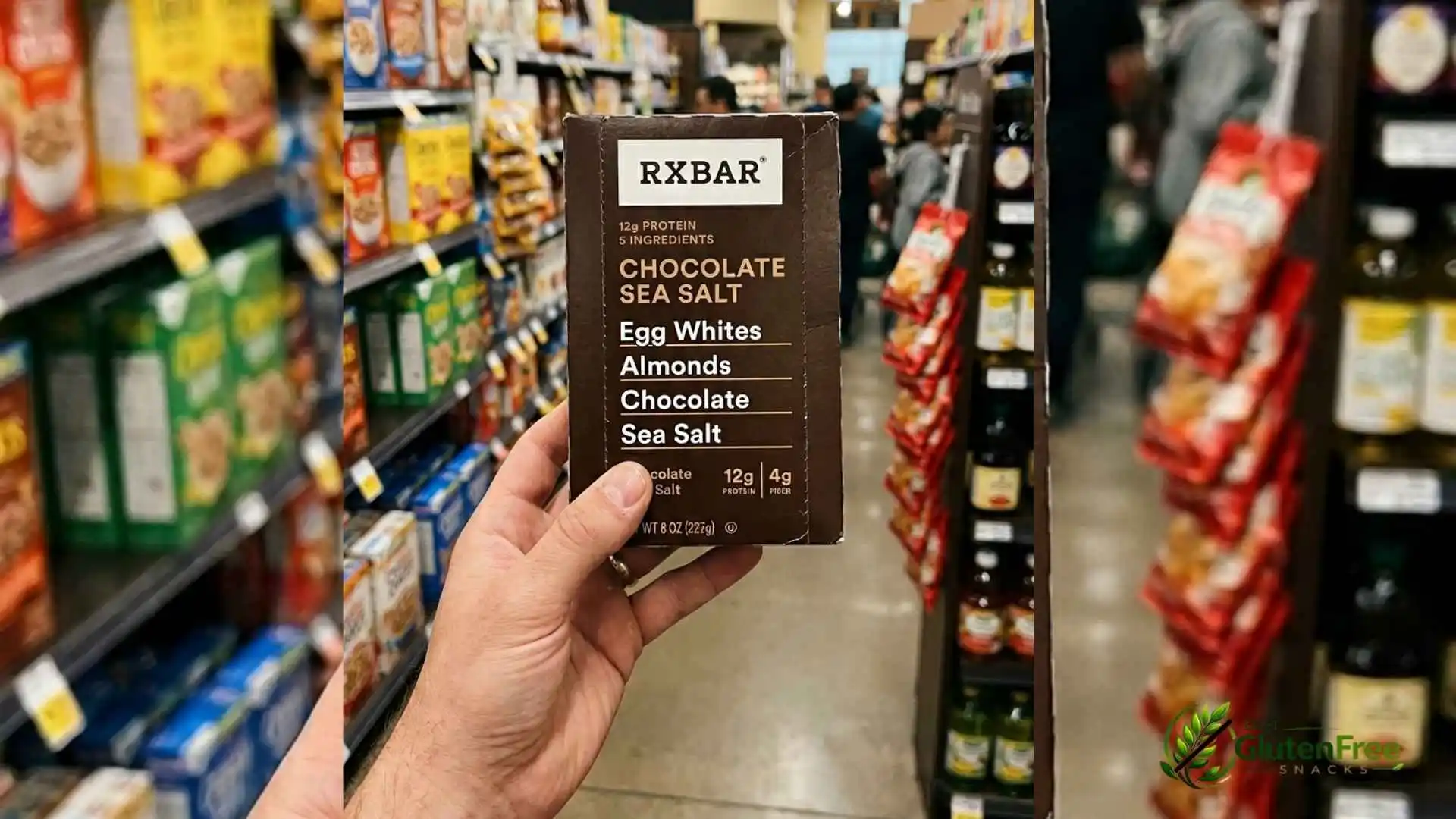
RXBAR is one of those brands I kept coming back to because it actually delivers on what it promises. The texture is dense and chewy, and yes, it takes effort to ea,t but that’s part of why it works.
With around 12of g protein and simple ingredients like egg whites and dates, it actually feels like a proper snack instead of filler. I noticed I didn’t get that quick crash you get from softer, sugary bars.
As a gluten free snacks brand, RXBAR stands out for ingredient transparency and real satiety.
If you’re combining performance with dietary restrictions, this gluten-free and dairy-free snacks guide expands on similar options.
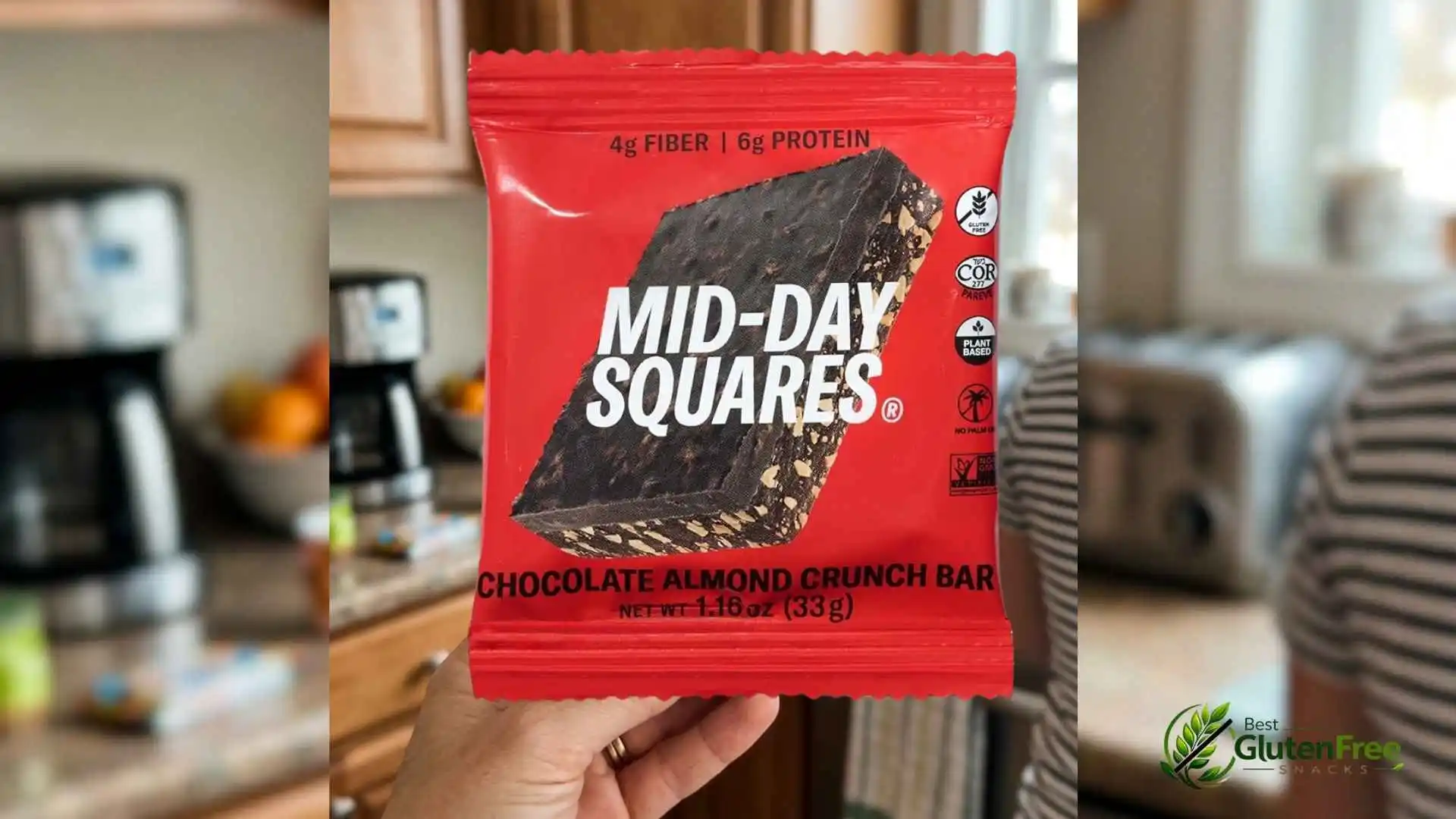
This one surprised me. It feels like a mix between a chocolate bar and a functional snack, but somehow manages to balance both.
The texture is soft, slightly fudgy, and very easy to eat. But unlike typical chocolate snacks, it actually has some substance, around 6gof protein plus fibre. I tried it as a mid-day snack, and it held up better than expected.
As a gluten free snacks brand, Mid-Day Squares manages to combine taste with function better than most.
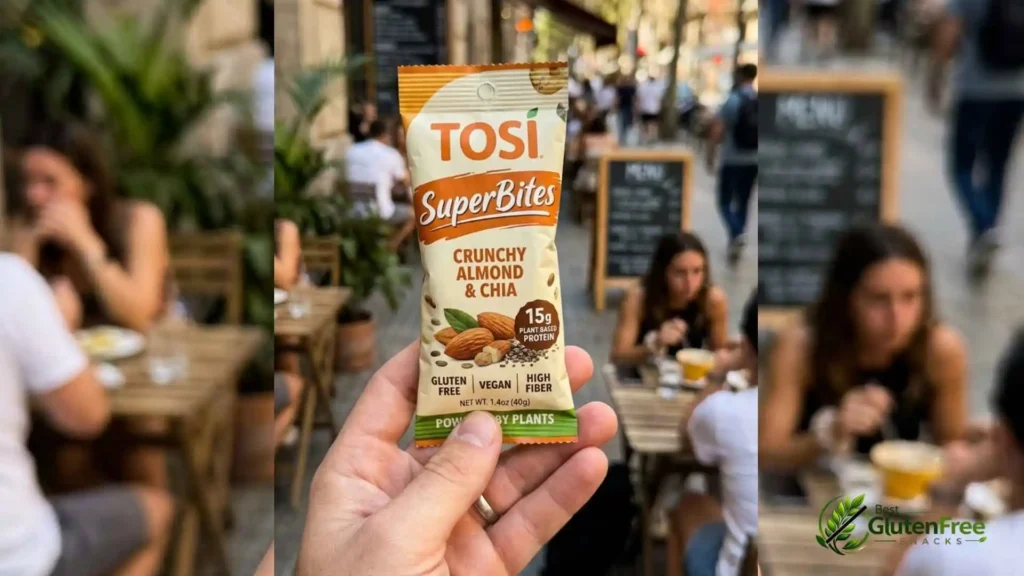
Tosi feels like a clean upgrade the moment you try it. The clusters are crunchy, slightly chewy, and packed with seeds that actually give some bite.
What I noticed most was how balanced it felt around 4g protein, good fats, and fiber that actually keeps you steady. It didn’t spike energy and drop it, it stayed consistent.
As a gluten free snacks brand, Tosi is clearly built around ingredient quality first.
Mary’s Gone Crackers Super Seed is where cracker brands finally start feeling complete. The seed blend gives a deep crunch, and unlike basic crackers, these actually hold up with dips and toppings.
Fiber is noticeably higher here, and while protein is moderate, the combination makes it much more filling. I used these with hummus, and they didn’t break or lose texture.
As a gluten-free snacks brand, Mary’s has clearly figured out how to use seeds properly.
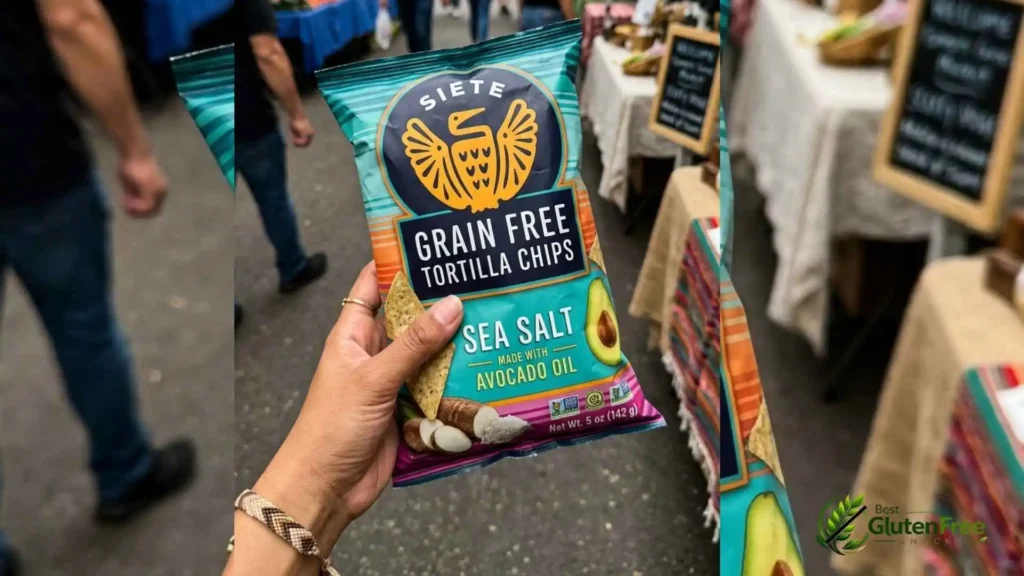
Siete completely changed how I looked at gluten-free chips. The cassava base gives them a lighter but still satisfying crunch, and they don’t feel greasy or overly processed.
I noticed they’re easier to keep eating but also more satisfying than regular chips. Ingredients are cleaner, and while protein is low, the overall quality makes up for it.
As a gluten free snacks brand, Siete focuses on better ingredients without sacrificing taste.
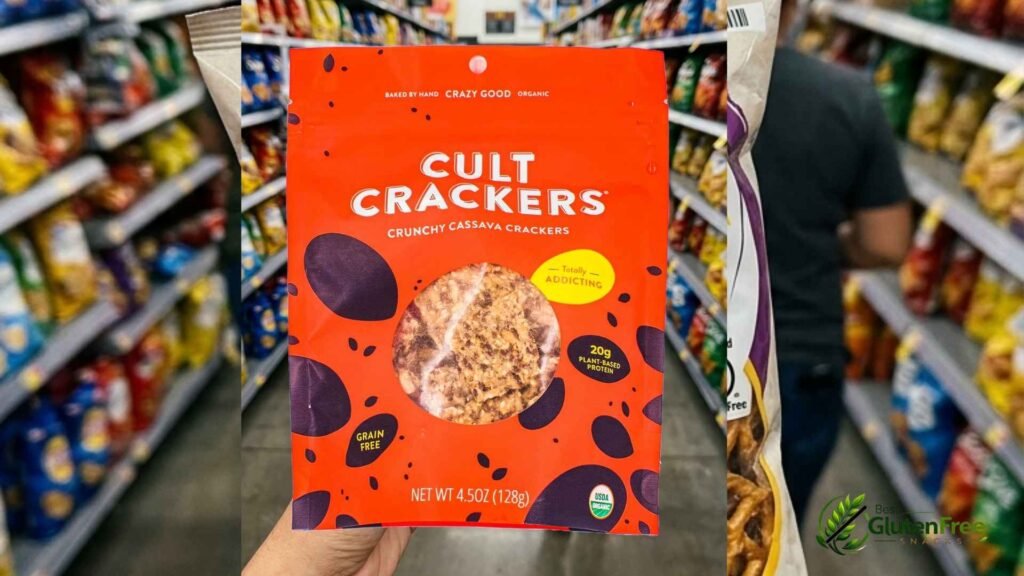
Craize Cassava Crackers stood out immediately. The cassava base gives them a clean, crisp texture that feels lighter than almond flour but stronger than rice crackers.
They don’t crumble, they hold toppings well, and they don’t feel dry, which is rare. I found myself going back to these more than most crackers.
As a gluten free snacks brand, Craize hits that balance between texture and simplicity really well.
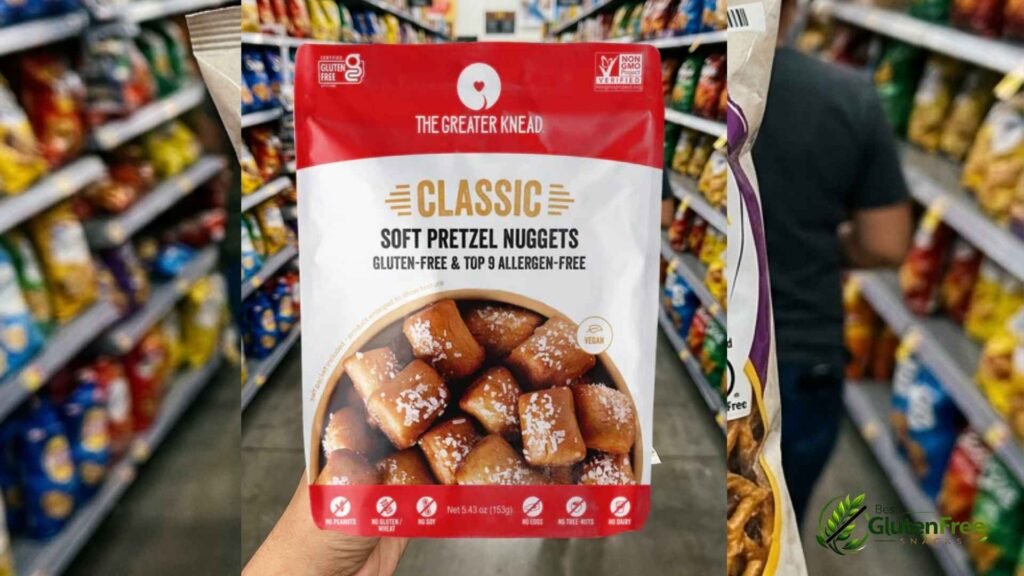
This is one of the rare gluten free snacks that actually feels close to the original version. The texture is soft, slightly chewy, and doesn’t fall apart like most GF pretzels.
I tried these warm, and honestly, it didn’t feel like a compromise. That’s rare in this category. While protein isn’t high, the overall experience makes up for it.
As a gluten free snacks brand, this one stands out for replicating real texture.
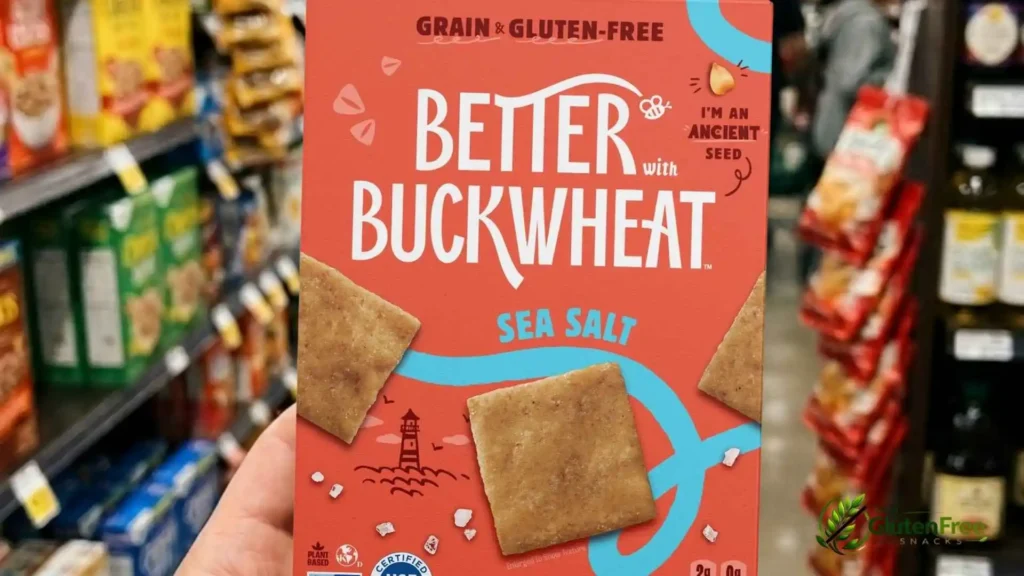
This was the one that surprised me the most. Buckwheat gives a completely different depth, strong crunch, slightly nutty flavor, and a more satisfying bite than most gluten-free crackers.
They feel more like a complete snack rather than a substitute. With better fiber content and a sturdier texture, they actually keep you full longer than expected.
After testing everything, this was the brand I kept reaching for again without thinking twice, and that’s why it sits at the top.
I didn’t rank these gluten-free snack brands by just tasting one bite and moving on; I tested them on facts-based criteria as they should be tested. That means opening them during work hours, pairing them with dips, eating them straight out of the pack, and even leaving some open for a day to see how they hold up.
For most brands, I tried more than one product type when available. If a brand offered both almond flour crackers and seed-based versions, I tested both, but I didn’t waste time comparing different flavors of the same product. The goal was to judge the brand’s core quality, not seasoning variations.
I paid close attention to the texture of how each snack behaves after a few bites, not just the first impression. Does it stay crispy or turn dry?
Ingredients were the second major factor. Brands using chickpeas, cassava flour, almond flour, or seed blends consistently performed better in both texture and satisfaction.
I also looked at how filling each snack actually is in real use. Some snacks feel fine for 10–15 minutes, then you’re reaching for something else again. And finally, I checked the labelling carefully. There’s a difference between snacks that are just labeled gluten-free and those that are Certified Gluten Free. That difference becomes clearer when you compare structured options inside this certified gluten-free snacks breakdown.
After going through all 30 brands this way, side by side, in a real situation, a pattern became clear.
After going through all 30 gluten-free snack brands, one thing became clear: not every brand is built for the same situation. Some are great when you want something light and quick, while others actually replace a proper snack or even a small meal.
I found myself rotating between different brands depending on the time of day. What worked during work hours didn’t always work late at night, and some snacks that tasted great didn’t hold up when I needed real energy. That’s why grouping them makes more sense than just ranking them.
Here’s how they naturally fit into real-life use:
After testing everything from dry rice crackers to high-protein options, the difference between average and top-tier gluten-free snack brands comes down to one thing: they actually work beyond the first few bites. Texture holds up, ingredients make sense, and you don’t feel like you need something else right after. If I had to narrow it down to the brands I’d genuinely keep buying, it comes down to three very clear choices depending on what you need.
If you want to go beyond brands and try simpler options at home, these gluten-free snack recipes are worth exploring.

Muhammad Asad Sharif Muhammad Asad Sharif is a dedicated gluten-free snacks researcher and reviewer with over 8 years of experience living gluten-free. He focuses on evaluating products through real-world testing examining ingredient quality, texture, nutritional balance, and label accuracy to ensure every recommendation is both safe and practical. His work is built around strict gluten-free standards (under 20 ppm) and a clear goal: helping readers choose snacks that are reliable, well-made, and genuinely worth buying.
